
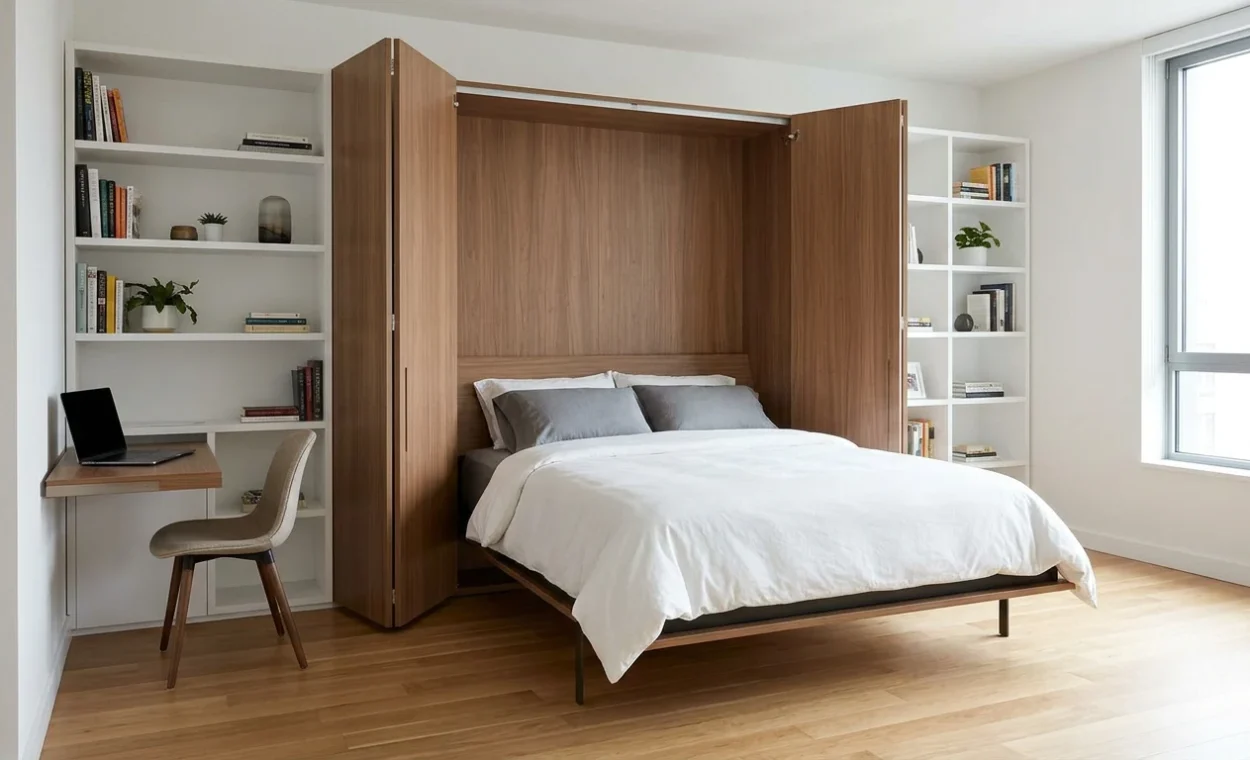
Are Murphy beds good for small rooms?

You ever stand in a tiny room and feel like the walls slowly inching closer, like… not literally but yeah kind of. That’s where Murphy beds, or what some folks call wall beds, start sounding like a genius idea, or a trap, depends who you ask honestly.
So you’re here wondering if Murphy beds for small rooms actually make sense, or just one of those Pinterest fantasies that looks better in photos than real life. Let’s talk through it, not neat, not polished, just how it actually plays out when you live with one.
What even is a Murphy bed, like really
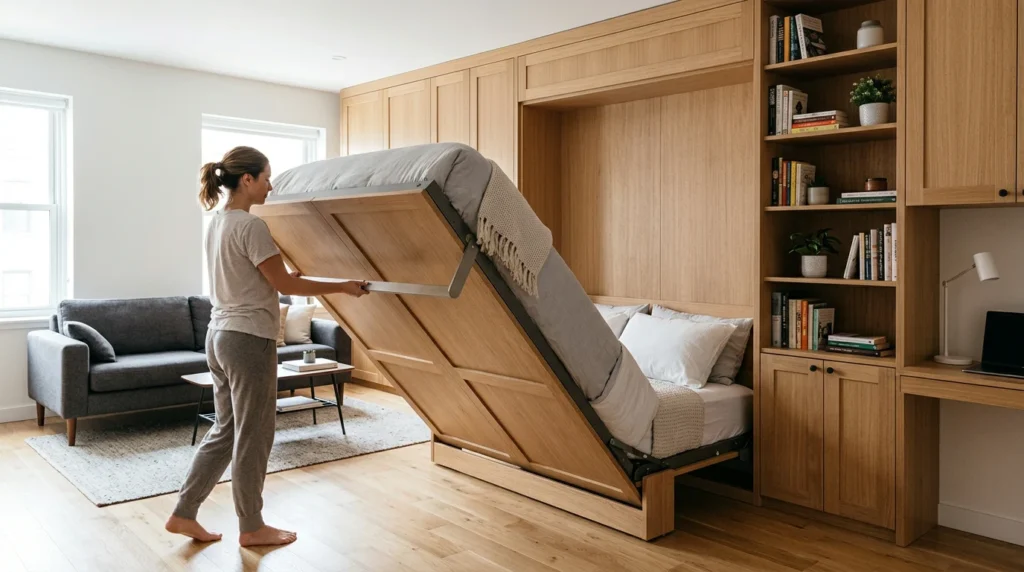
It’s basically a foldable bed that hides into a wall or cabinet, you pull it down at night, push it back up in the morning. Sounds simple, but the mechanism inside, springs or pistons or whatever, that part is doing heavy lifting literally.
Some models include shelves, desks, even sofas attached, so your small bedroom furniture ideas suddenly feel like you cracked some code.
But then again, sometimes you’re just lifting a big wooden slab twice a day, and your back quietly files a complaint.

Space saving sounds nice… but how much space actually saved
Here’s the part people like to throw numbers at. A typical queen size bed takes around 30 to 35 square feet when laid out. In a 100 sq ft room, that’s like one third gone, just gone, no negotiation.
Now when you fold a Murphy bed, you recover almost all of that floor space, except the cabinet depth which is usually 16 to 20 inches. So yeah, on paper, you get back maybe 80 percent of usable space.
In cities where apartments are shrinking every year, especially urban areas where average bedroom sizes dropped below 120 sq ft in many places, this matters more than people admit.
But… and yeah there’s always a but… you only gain that space if you actually fold it up daily. Many people don’t after week two. Happens.
The daily routine thing nobody talks about enough
You wake up, you need to fold the bed. Not optional, unless you enjoy stepping over it like a hurdle.
And some mornings, you’re just… tired. You skip it. Then next day same thing. Suddenly your space saving bed is just… a normal bed that looks slightly more complicated.
Also sheets. People ask this weirdly late. Most Murphy beds let you keep bedding strapped in, but thick duvets sometimes bulge out or mess the closing.
So you’re adjusting sheets, pushing pillows flat, doing this tiny ritual everyday. Not hard, but repetitive. Like brushing teeth but heavier.
Comfort level, because no one wants a fancy uncomfortable bed
You might assume it’s less comfy. Not always true.
Most modern Murphy bed mattresses support standard thickness, around 8 to 12 inches. That’s decent. Memory foam, hybrid, even some spring mattresses work fine.
But, the frame matters. Cheaper models can feel slightly… shaky? Not unsafe, just not that grounded solid feel of a traditional bed.
People who sleep light, they notice these things. People who crash like rocks, probably not.
Installation is where things get a bit serious
This is not like assembling a chair from a box and hoping for the best.
A wall bed installation often needs proper anchoring into studs or concrete. If done wrong, worst case, it tips. Rare but yeah, not something you want to test.
Some reports suggest professional installation reduces failure risks significantly. And honestly, unless you’re very confident, it’s safer to let someone handle it.
Also rental homes. That’s a thing. Not everyone allowed to drill into walls, so your options get limited.
Cost… yeah, not cheap usually
Here’s where expectations get checked.
Basic Murphy bed systems can start around a few hundred dollars if DIY kits, but good quality ones often go much higher. Custom units with storage or desks, those can run into serious money.
Compared to a regular bed frame, it’s definitely a bigger investment.
But then again, if you live in a tiny apartment where every square foot matters, the trade-off sometimes feels justified. Space has value, even if it doesn’t show on receipts.
Small room psychology, sounds weird but matters
This part is less talked about, but people living in cramped spaces often report feeling less stressed when rooms are flexible.
When your small room layout ideas include convertible furniture like Murphy beds, the room feels less like a box and more like… adaptable space.
Morning it’s a living room. Night it’s a bedroom. That shift does something mentally, hard to explain properly.
But also, some people prefer permanence. They want a bed that stays a bed. No folding, no switching modes.
Storage and multi-function setups, where it shines actually
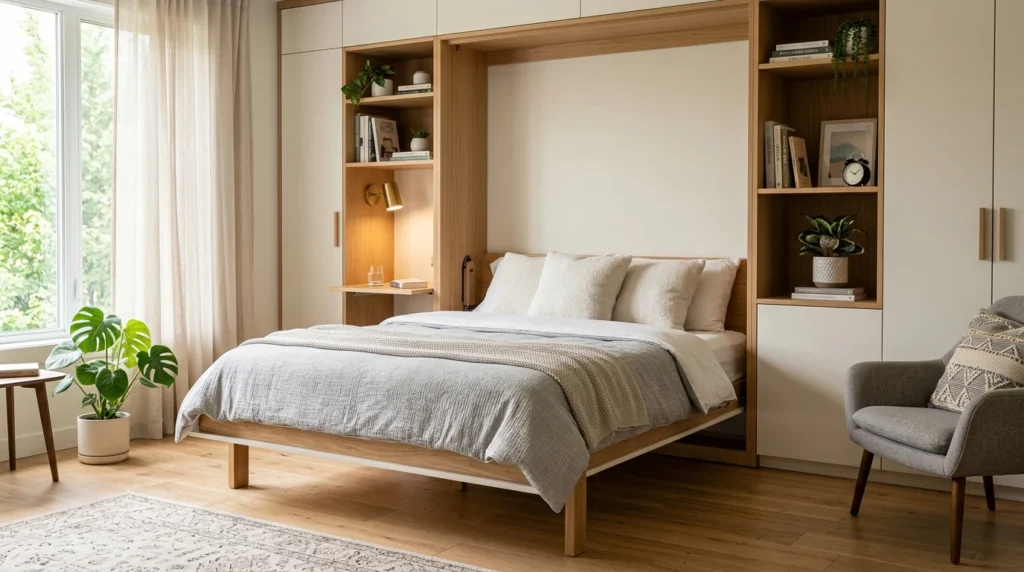
Some Murphy bed designs come with built-in cabinets, desks, wardrobes even.
So your single wall becomes storage + bed + sometimes workspace. That’s efficient, almost suspiciously efficient.
Especially for studio apartments or home offices doubling as guest rooms.
Though… more moving parts means more things that can break eventually. Hinges, pistons, alignment, all that.
Safety, yeah we should say something about that
Modern systems are pretty safe. Locking mechanisms, controlled descent, they don’t just slam down randomly.
Still, you don’t want kids playing with it unsupervised. And regular maintenance helps, tightening bolts, checking alignment.
Like anything mechanical, neglect it and it starts acting weird.
So… are Murphy beds actually good for small rooms?
Short answer, yes… but not universally.
If you’re someone who likes structure, routines, and don’t mind a little daily setup, a Murphy bed for small spaces can feel like you unlocked hidden square footage.
If you hate repetitive tasks, or you know you’ll get lazy with folding it, then it might end up being an expensive regular bed pretending to be clever.
Also depends how small your room is. In extremely tight spaces, it’s almost a necessity. In slightly small rooms, maybe optional.
A slightly messy conclusion because real life is messy
You don’t buy a Murphy bed just for saving space. You kind of buy into a lifestyle where your room changes identity twice a day.
Some people love that. Some try for a week and quietly regret it.
And yeah, I’ve seen both happen.
So are they good? Yeah, for the right person, in the right room, with the right expectations. Otherwise… it’s just a heavy rectangle on hinges waiting for you to deal with it every morning.

Ethan Caldwell is a licensed contractor and residential remodeling specialist based in Denver, Colorado. With over 15 years of hands-on experience, he focuses on structural renovations, foundation repair, and large-scale home transformations. Ethan’s work bridges the gap between technical construction and practical homeowner advice, helping readers understand complex renovation challenges in simple terms. When he’s not on-site, he writes about budgeting strategies, renovation sequencing, and avoiding costly remodeling mistakes.