
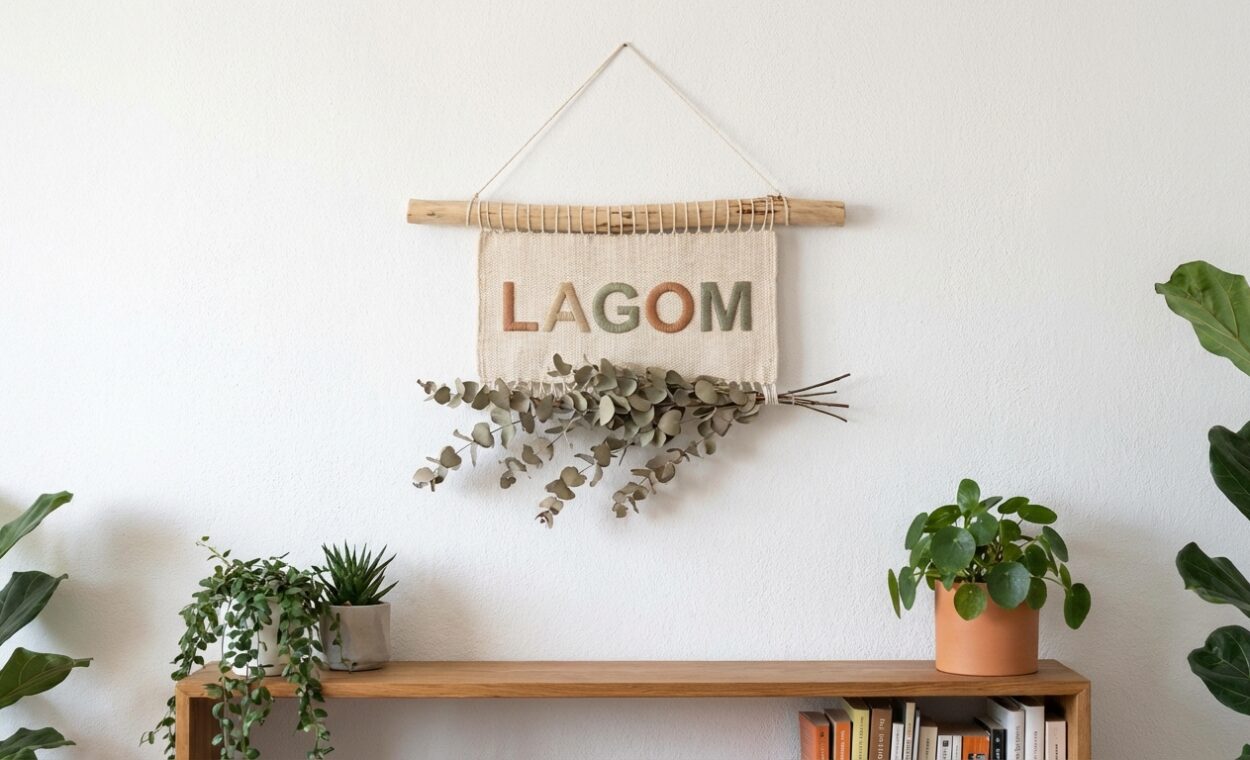
Lagom Wall Decor Ideas That Feel Just Enough

You stand there staring at a wall and something feels off… not empty exactly, not messy either, just… wrong in a quiet way. That’s where lagom wall decor, yeah that soft Swedish idea, starts making sense even if you don’t fully get it yet. It’s not trying to impress anyone, which is funny because it ends up doing exactly that, but in a low voice.
Lagom, like its Danish cousin hygge, is a way of living your life with wellness and peacefulness in mind. Both are excellent ways to incorporate wellness in design, however, hygge is all about making a house look cozy and helping you to feel relaxed and secure in your home and life, while Lagom is more about balance and mindfulness to help make life more manageable.
Lagom interior design basically means “just enough” but honestly that translation feels too neat, too clean. In reality it’s more like… you stop before things get annoying. You don’t push it. You let the wall exist without over explaining it.
And most people, you probably too, mess up walls by trying too hard. Adding more frames, more colors, more “ideas” until the wall looks like it arguing with itself.
Lagom vs Minimalism (Not Same Thing, Even If People Say It Is)
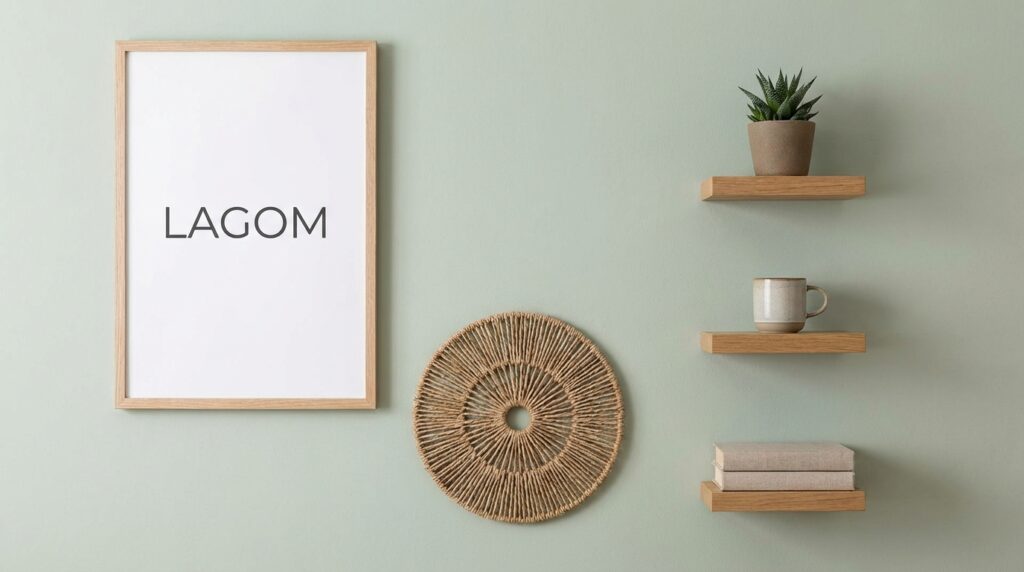
So yeah, people confuse minimalist wall decor and lagom home decor all the time. They overlap, sure, but they don’t behave same.
Minimalism sometimes feels like you removed personality on purpose. Lagom doesn’t do that. It allows personality but… trimmed down, like editing a sentence but leaving the emotion.
There was this interior behavior study floating around, said about 60% plus people feel more relaxed in spaces that are not visually overloaded. Makes sense because your brain doesn’t want to process ten different things at once while you just trying to sit.
We live in a fluid age, where we are connected to work 24 hours a day to the detriment of our time: we impatiently wait for answers from our interlocutors at all hours. We are so busy that we forget we have a life. The way out? By deciding together to change our mindsets, behaviours and lifestyles and reclaim the right balance between work and home life. The inspiration comes to us from Sweden. Lagom is the Swedish word for ‘the right amount, neither too much nor too little’. It comes from the phrase “lagom är bäst” which means “the right amount is the best”. The Lagom collection from Terratinta Ceramiche fully embraces this philosophy, treating the natural essence of stone without excess, remaining as true as possible to its identity.
https://www.terratintagroup.com/collections/lagom/
Also search trends for Scandinavian wall decor and neutral wall styling ideas been going up steadily over last few years. People are clearly tired of loud walls that shout at you.
The “Enough” Point Is Annoyingly Hard To Measure
Nobody explains this properly. Like how do you know when it’s enough?
You don’t count items. That’s the trick. You feel the space, which sounds useless advice but stick with it.
If your eyes move too quickly across the wall, it’s too much.
If your eyes don’t move at all, it’s too little.
There’s this weird middle point where your eyes pause, then settle. That’s your lagom wall balance, even if you didn’t plan it.
I once removed one small frame, just one, and suddenly the wall felt calmer. It irritated me how such a tiny thing could shift the whole room.
Colors That Don’t Fight Each Other (But Still Not Boring)
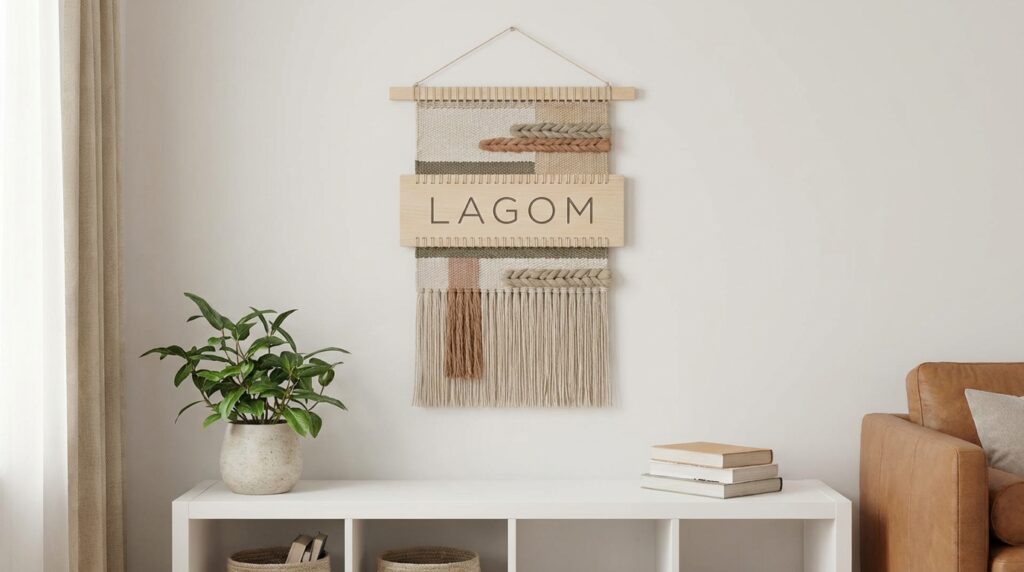
Lagom walls rarely go loud. They lean into tones that don’t compete.
You’ll notice a lot of soft beige wall decor, muted grey walls, warm white interiors, even some dusty green accents. But here’s where people mess up, they flatten everything.
Then the wall looks like it gave up.
You still need variation, just not through bright colors. Texture does the heavy lifting.
Think slightly rough wood, soft fabric frames, matte finishes. Not everything matching perfectly either, slight mismatch actually makes it feel real.
Gallery Walls That Don’t Look Like Panic Decisions
Gallery walls… people either go wild or avoid them completely.
Lagom approach sits somewhere in between. Fewer frames, more breathing room.
You don’t need ten pieces. Four or five can be enough if they relate somehow. One larger piece acts like an anchor, the others just… support quietly.
Spacing matters more than people think. Too tight and it feels cramped, too wide and it feels disconnected.
Also don’t make it too perfect. Slight misalignment, tiny irregularities, those actually help. Perfect grids feel like waiting rooms.
Natural Materials Just Calm Things Down (For Some Reason)
There’s something about wooden wall decor, rattan accents, ceramic wall pieces that makes a wall feel less tense. Not sure why exactly, maybe something biological, maybe just habit.
Even research on nature-inspired interiors showed people respond better to natural textures compared to synthetic finishes. Less stress, more comfort.
One wooden element can ground the whole wall. Add too many though, and you ruin it again. That balance thing comes back, annoying but necessary.
Empty Space Is Not Empty (It’s Doing Work Quietly)
This part takes time to accept. That blank space between items… it’s not wasted.
In lagom wall styling, negative space is part of the composition. Without it, everything suffocates.
You might feel tempted to fill every gap. Don’t. Let some areas remain untouched even if it feels incomplete at first.
It settles later. Slowly.
Lighting Changes Everything Without Asking Permission
Lighting doesn’t get enough credit. It literally changes how your wall looks without you touching the decor.
Warm light softens everything. Cool white light makes it feel… clinical, like a lab or something.
Soft wall lighting, indirect glow, even a small picture light can make simple decor feel intentional.
There was a study showing warm lighting increases perceived comfort significantly in interior environments. You don’t need numbers to feel that honestly.
Functional Decor That Doesn’t Feel Like Utility
Lagom doesn’t like useless objects. Everything should justify being there, even quietly.
A small shelf with one plant and one book works. A hook that looks good and actually gets used, better.
Mirrors are interesting too. They don’t just sit there, they reflect light, expand space visually.
So your functional wall decor becomes part of the aesthetic, not separate from it.
Plants Help, But Don’t Turn It Into A Jungle
Plants soften walls, no doubt. A bit of green breaks monotony.
But too many plants and suddenly it’s chaos again. Funny how quickly that happens.
One trailing plant, maybe another small one. That’s enough most times.
Indoor plant interest has grown a lot since people started spending more time at home, but lagom interior styling keeps it controlled. Always comes back to that.
Common Mistakes That Ruin The Whole Feel
Overmatching everything, that’s one. Buying decor in sets, another.
Filling every inch of wall, big mistake. Ignoring scale, also happens a lot.
And copying online images exactly… rarely works. Your wall, your light, your space, they all behave differently.
Lagom adjusts to your space. Not the other way around.
How You Actually Start Without Overthinking Too Much
Pick one wall. Not the whole house, that gets overwhelming fast.
Clear it completely. Then add one main piece. After that, maybe one smaller element.
Then stop.
Wait a day. Sit with it. If it feels empty, add one more thing. Just one.
This slow approach feels weird at first because nothing dramatic happens. But that’s kind of the point.
Why This Style Feels Calm In A Way You Don’t Expect
It’s not flashy. People might not notice it immediately.
But you notice how you feel in the room. That’s the difference.
Your brain isn’t constantly processing visual noise. It relaxes without asking for attention.
And yeah… in a world where everything is loud and trying to grab you, a wall that doesn’t try so hard feels oddly comforting.
Not perfect, not empty, not crowded.
Just enough.